
That is a real tension. Datacenters consume a significant share of global electricity and that percentage is climbing with AI workloads. The renewable energy procurement roles exist precisely because this is becoming a crisis that needs managing.
Sign up to see more
SignupAlready a member?
LoginBy continuing, you agree to Sociomix's Terms of Service, Privacy Policy
Sign up to see more
SignupAlready a member?
LoginBy continuing, you agree to Sociomix's Terms of Service, Privacy Policy

That is a real tension. Datacenters consume a significant share of global electricity and that percentage is climbing with AI workloads. The renewable energy procurement roles exist precisely because this is becoming a crisis that needs managing.
Sold purely on the panel layout description in this article. Good panel composition is the thing I miss most when manhwa gets adapted to other formats.
Second Coming of Gluttony deserves every bit of praise it gets. The fact that the protagonist's main battle is with his own addictive personality rather than external enemies makes it so much more emotionally resonant than typical power fantasy stories.
Genuinely curious, does anyone else feel like the Regressor Instruction Manual is actually more fun to read than most stories where the actual regressor is the main character? Lee Kiyoung outsmarting someone who already has all the answers is kind of genius.
The regression genre in manhwa is crowded but Tomb Raider King earns its place by making the protagonist's knowledge a liability as much as an asset as the story progresses.
At this point the manhwa to anime wave is big enough that it is changing what casual anime viewers consider normal story structure. Regression plots and overpowered protagonists are basically mainstream now.
The anthology structure of Season of Blossom working for episodic anime consumption is exactly right. Seasonal romance anime that resets the emotional stakes each arc is perfectly suited to weekly episode releases.
While Synthesia leads in revenue, HeyGen leads in customer acquisition momentum with 152% year-over-year growth in mid-market adoption. That explosive growth rate allowed HeyGen to close much of the customer count gap by late 2025. The company is winning by making avatar video accessible to smaller teams and individual creators who cannot afford enterprise contracts but need professional video capabilities. HeyGen positioned itself for small and medium businesses, marketing teams, content creators, and solo entrepreneurs rather than enterprise learning and development departments. This market segment values affordability, ease of use, and creative flexibility over governance features and advanced integrations. Average contract values are roughly one-third of Synthesia's, reflecting this different customer profile.
The comparison between v0 and general-purpose AI coding tools is the key distinction the article gets right. Purpose-built training on frontend design patterns is what produces components that look like a human designer made deliberate choices, not a computer filling in defaults.
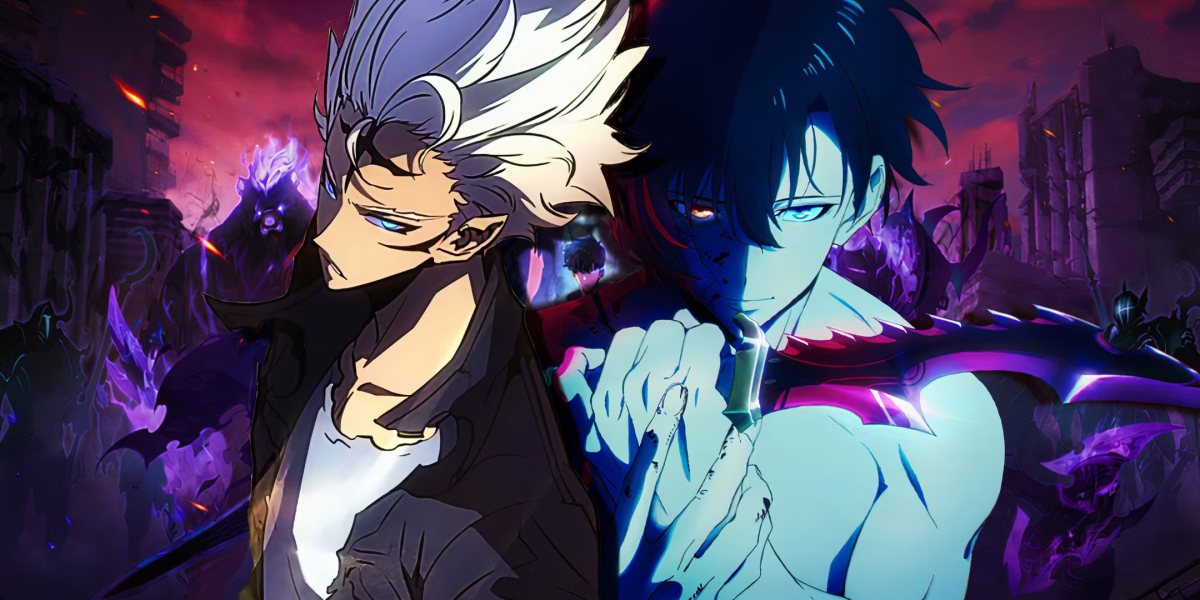
The manhwa world exploded when Solo Leveling first introduced us to Sung Jinwoo's journey from the weakest hunter to humanity's strongest defender. Now, Solo Leveling Ragnarok brings a fresh perspective to this beloved universe, and fans everywhere are asking the same questions. Can the sequel live up to the original? Do you need to read Solo Leveling first? What makes this continuation worth your time? This guide covers everything you need to know about Solo Leveling Ragnarok, whether you're a longtime fan or someone curious about jumping into the series Solo Leveling Ragnarok is not a reboot or alternate timeline. This is a direct sequel that continues the story years after the original series concluded. The protagonist shifts from Sung Jinwoo to his son, Sung Suho, who must forge his own path in a world still recovering from the catastrophic events his father prevented.
The devil's advocate take here is that a lot of what this article praises as innovative is pretty common in light novel and web novel spaces if you read widely. The novelty is more about bringing it to manhwa format accessibly.
Watching traditional software companies scramble to respond to this is honestly fascinating. The incumbents have the resources but they do not have the hunger.
Both companies losing billions while generating tens of billions in revenue is the defining financial paradox of the AI era. Every legacy tech company would kill for those growth rates and every rational CFO would be horrified by those burn rates simultaneously.
Genuinely, who do you think wins this? Not in terms of revenue right now but in five years when compute gets cheaper and model quality converges across everyone. What's the actual moat?
The timeline issue is the thing I keep coming back to. Three to five years to first production silicon. The AI field moves so fast that what makes sense to optimize for today might be completely irrelevant by 2029. How do you even design for that uncertainty?
Genuinely asking, how do we actually verify any of this? One researcher already pointed out that Anthropic's blog post left out key details needed to confirm the vulnerability claims. Who is doing independent verification here?
The artificial intelligence industry is entering a new phase of competition, one that extends far beyond the development of advanced language models and neural networks. Companies are now engaged in an intense struggle to secure the computational infrastructure necessary to train and deploy their AI systems. In this context, Anthropic has reportedly begun exploring the possibility of designing and manufacturing its own specialized processors to power Claude, its flagship conversational AI platform, along with its broader suite of artificial intelligence technologies. This strategic consideration emerges at a critical moment in the global AI sector. The exponential growth in model complexity and capability has created unprecedented demand for high-performance computing resources. Sources familiar with the matter indicate that Anthropic is conducting feasibility studies to determine whether developing proprietary semiconductor technology could reduce its dependence on external hardware vendors while ensuring reliable access to the computing power required for its operations.
the scarier detail is not the vulnerabilities. It is that attackers made thousands of requests per second during the espionage campaign. Human defenders cannot compete with that tempo operationally.
The article is pretty fair but I think it undersells how much the ByteDance ownership structure matters. Yes, TikTok US operations are technically separate now, but ByteDance retains a significant ownership stake and continues to run TikTok internationally. The legal exposure is real.
Join independent creators, thought leaders, and storytellers to share your unique perspectives, and spark meaningful conversations.