What about people who exercise in the evening? Does late workouts conflict with the idea of tapering food down by late afternoon?
9
Sign up to see more
SignupAlready a member?
LoginBy continuing, you agree to Sociomix's Terms of Service, Privacy Policy

What about people who exercise in the evening? Does late workouts conflict with the idea of tapering food down by late afternoon?
Does this series deal with AI art theft directly or is that more of a thematic subtext? I have seen people online claiming it is a direct commentary but the post seems to treat it as interpretive.
The technology sector is experiencing a paradox. While headlines scream about mass layoffs at major tech companies, a critical shortage is quietly building in one of the most essential areas of digital infrastructure. Datacenters, the physical backbone of our digital world, are facing an unprecedented demand surge, and there simply are not enough skilled professionals to build and maintain them. Countries across the globe are rushing to establish their own datacenter infrastructure. From India's ambitious plans to become a datacenter hub to the European Union's push for data sovereignty, and emerging markets in Southeast Asia and Latin America building their first large scale facilities, the construction boom is just beginning.

Eleceed. The CGI concern for Eleceed is real. If Kayden's expressions do not land the whole mentor comedy dynamic falls apart and the show becomes just another awakened powers action series.
My friend who got me into ORV literally just texted me this article and now we are both spiraling about when the first trailer is going to drop. This community has been patient for so long.
Something this article gets exactly right is that regression stories work because of wish fulfillment at a personal level, not just a power fantasy level. Everyone has a moment they would redo and that universality is the actual source of the genre's appeal.
Hard agree on the emotional earning point. The deaths in this series hit because you understand why the person mattered before they go. They are not props.
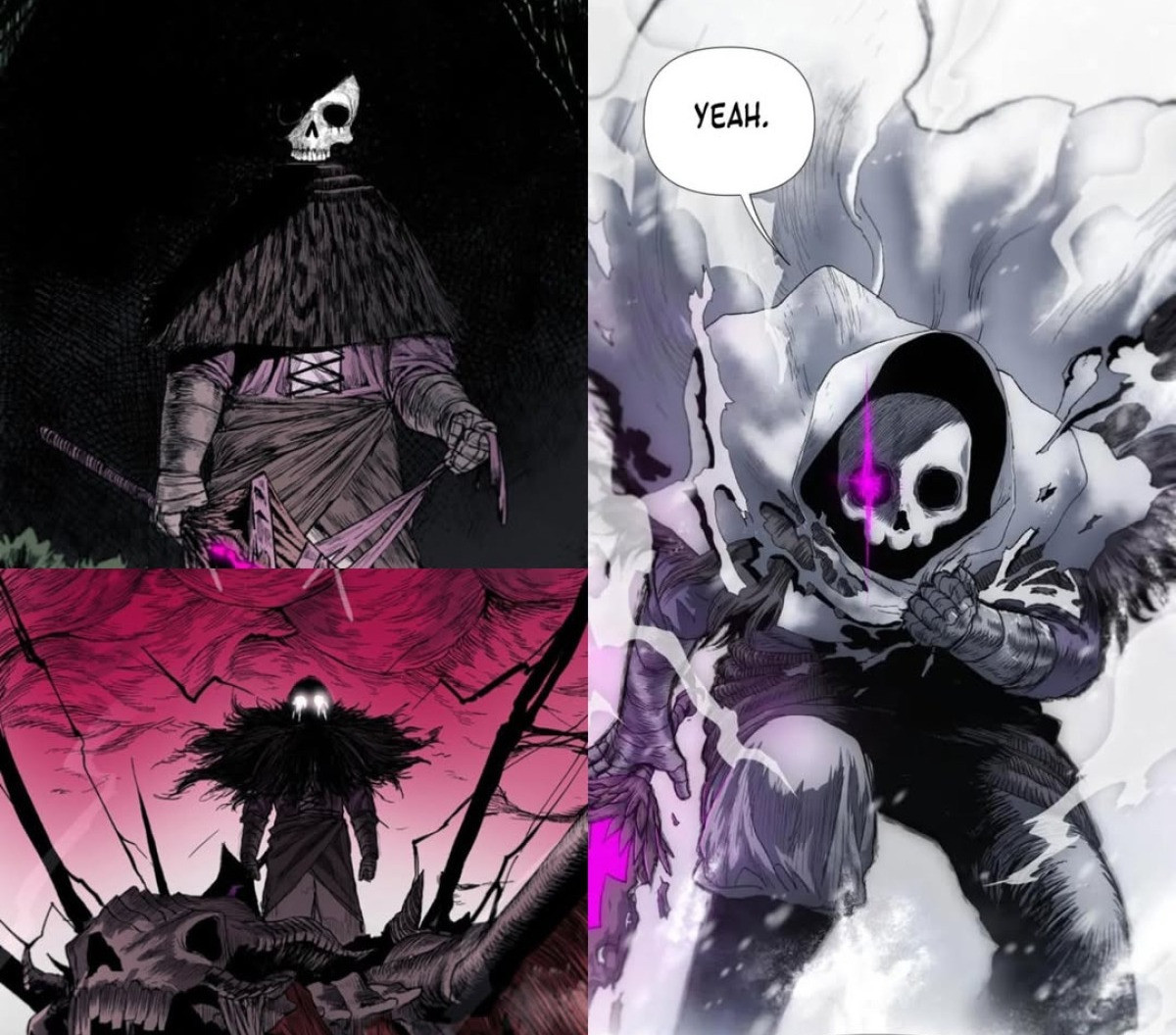
When a manhwa gets compared to Frieren: Beyond Journey's End but with a dark, bleak twist, expectations immediately rise. The Tale of the Skeleton Messenger, released on Webtoon in January 2026 by creators kain_y and SORAGAE, arrives with that exact premise and a tone that sets it apart from the increasingly crowded fantasy manhwa landscape. Most fantasy stories lean toward hopeful narratives where heroes overcome darkness through determination and friendship. Even dark fantasy typically offers glimmers of light and the possibility of triumph. The Tale of the Skeleton Messenger takes a different approach, embracing bleakness and melancholy in ways that feel refreshing rather than oppressive, thoughtful rather than nihilistic.
Wait, what about the audio situation? The article talks about AI voices and lip sync but Veo 3 generates native synchronized audio directly from the prompt. Runway still has to add audio separately, which is a meaningful workflow gap for anyone doing dialogue-heavy content.
Speaking from experience building products at a startup, the back-and-forth between design and engineering is not just annoying. It eats two to three weeks on every major feature. If v0 compresses that even by half, the ROI case writes itself.
While Synthesia leads in revenue, HeyGen leads in customer acquisition momentum with 152% year-over-year growth in mid-market adoption. That explosive growth rate allowed HeyGen to close much of the customer count gap by late 2025. The company is winning by making avatar video accessible to smaller teams and individual creators who cannot afford enterprise contracts but need professional video capabilities. HeyGen positioned itself for small and medium businesses, marketing teams, content creators, and solo entrepreneurs rather than enterprise learning and development departments. This market segment values affordability, ease of use, and creative flexibility over governance features and advanced integrations. Average contract values are roughly one-third of Synthesia's, reflecting this different customer profile.
Used this for three months straight and the time savings are genuinely real. Reclaiming even two hours a week back from pointless status updates feels like getting a raise.
The regression subgenre has exploded in popularity over the past few years, becoming one of the most beloved narrative frameworks in Korean manhwa. The core premise is deceptively simple: a protagonist dies or fails catastrophically, then returns to an earlier point in time with their memories intact. Armed with future knowledge, they get a second chance to change their fate, save loved ones, gain power, or pursue revenge against those who wronged them. What makes regression stories so compelling is the combination of dramatic irony, strategic satisfaction, and emotional depth they provide. Readers know what the protagonist knows, creating tension when other characters make mistakes we can see coming. We feel smart alongside protagonists who use foreknowledge to outmaneuver enemies. And we experience the emotional weight of carrying memories of futures that haven't happened yet, of people who died who are currently alive, of betrayals that haven't occurred.

The manhwa world exploded when Solo Leveling first introduced us to Sung Jinwoo's journey from the weakest hunter to humanity's strongest defender. Now, Solo Leveling Ragnarok brings a fresh perspective to this beloved universe, and fans everywhere are asking the same questions. Can the sequel live up to the original? Do you need to read Solo Leveling first? What makes this continuation worth your time? This guide covers everything you need to know about Solo Leveling Ragnarok, whether you're a longtime fan or someone curious about jumping into the series Solo Leveling Ragnarok is not a reboot or alternate timeline. This is a direct sequel that continues the story years after the original series concluded. The protagonist shifts from Sung Jinwoo to his son, Sung Suho, who must forge his own path in a world still recovering from the catastrophic events his father prevented.

On the model quality question, the benchmarks are all over the place and both companies commission their own evals. What I trust is production usage data. At my company we run A-B tests on complex tasks monthly. Claude wins on multi-step reasoning and long context consistently. Codex wins on raw code generation speed.
Anthropic building its brand right before an IPO on being the responsible one is smart business and might also be genuinely good for the world. Those two things can be true simultaneously and I am not sure why we insist on treating them as mutually exclusive.
What's the realistic scenario where Bitcoin holds above $72K for more than two weeks? Walk me through what needs to go right.
That shift toward capital intensity is a genuine concern for competition. The more AI depends on massive proprietary infrastructure, the harder it becomes for smaller players and startups to compete on anything like equal terms.
Speaking as someone with a background in open source development, having the Linux Foundation in the coalition is not just symbolic. They have direct commit access to the most widely deployed codebase in the world. That matters operationally.
the bigger story here is not any single vulnerability. It is that the entire coordinated disclosure model that the security industry depends on was built for human-speed discovery and it cannot handle AI-speed discovery.