
Tomb Raider King had its opening theme SHOW DOWN performed by QWER and honestly that collaboration alone is going to introduce the anime to an audience that was not going to find it otherwise.
Sign up to see more
SignupAlready a member?
LoginBy continuing, you agree to Sociomix's Terms of Service, Privacy Policy

Tomb Raider King had its opening theme SHOW DOWN performed by QWER and honestly that collaboration alone is going to introduce the anime to an audience that was not going to find it otherwise.
In a medium filled with talented artists producing stunning work, making a claim about any series having the "best" art feels bold. Yet Nano Machine consistently delivers combat sequences so fluid, detailed, and visually innovative that even readers who don't typically care about martial arts stories find themselves captivated by the sheer spectacle on display. The series combines traditional murim aesthetics with futuristic sci-fi elements, creating a unique visual identity that stands apart from typical cultivation manhwa. The nano machine implanted in protagonist Cheon Yeo-Woon's body doesn't just give him power. It becomes a storytelling device that allows the artist to visualize techniques, energy flows, and combat analysis in ways other series can't replicate.
As someone who got into manhwa specifically because of Solo Leveling's anime, this list is both exciting and overwhelming. Where do you even start when fifteen series are launching in one year.
The Blade God confrontation chapters are peak Nano Machine visually. If those chapters do not sell you on the art nothing will.
Solo Leveling Arise Overdrive actually does a solid job letting you feel the power progression from the manhwa in game form. If you're a beginner who wants to understand the appeal before committing to reading, playing it first isn't a bad idea.
The fact that it has over 180 chapters of completed content already and the web novel is fully finished means an adaptation team would have everything they need. No rushing, no anime original endings.
Hot take: the real innovation here is not the technology, it is the interaction design. Dozens of tools had decent transcription before Descript. Nobody made editing the actual interface until Descript did.
Three years ago I would have laughed at paying any monthly fee for a code assistant. Now I genuinely cannot imagine going back to editing without one. The tooling has crossed a real threshold.
Developers have a new anxiety in 2026: token anxiety. You're in the middle of debugging a complex problem, the AI is helping you refactor three files simultaneously, and suddenly you wonder if this session is about to cost you $50. That mental tax slows you down and makes you second-guess using the tool you're paying for. Windsurf eliminated that anxiety with a simple decision: flat monthly pricing with no token limits. Fifteen dollars per month. Unlimited usage. No tracking credits or calculating costs per query. That pricing model sounds almost boring compared to the complex token systems other AI coding tools use, but boring is exactly what professional developers want when it comes to pricing. They want predictable costs and unlimited usage so they can focus on writing code instead of budgeting AI queries.
Honestly the shadcn community was already one of the best things happening in frontend tooling before v0. Combining those components with AI generation feels like a natural evolution that someone was always going to build.
v0 output quality for complex interactive components has improved significantly since early 2025. The things it got wrong consistently back then, state management in forms, responsive breakpoints, keyboard navigation, it handles much better now.
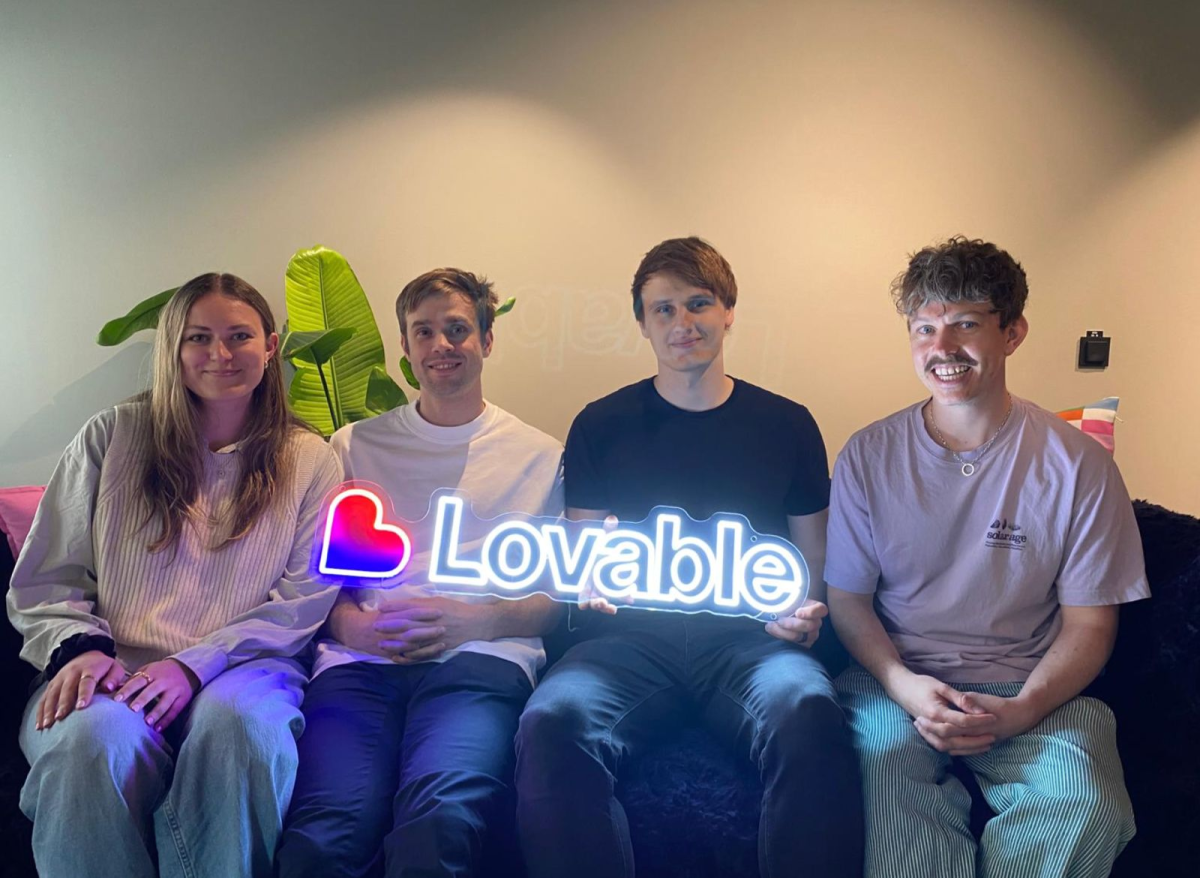
The software development world just witnessed something unprecedented. A European startup called Lovable reached $20 million in annual recurring revenue in just two months, making it potentially the fastest-growing startup in European history. But here's the twist that's making traditional software agencies nervous: they did it by giving non-technical founders the power to build full-stack applications without writing a single line of code. For years, the promise of no-code tools has been the same: anyone can build an app. But the reality has always been different. You'd create a beautiful frontend, get excited about your progress, and then hit the technical cliff. Suddenly you needed to configure databases, set up authentication, manage API keys, and deploy to servers. The "no-code" dream became a "hire-a-developer-anyway" nightmare.
The token-based pricing replacing fixed credits makes costs even harder to predict. At least with a fixed credit count you knew when you were close to the limit. Now a single complex full-stack generation can drain your monthly allocation in a few prompts.
The designer-developer relationship has been tense for decades. Designers create pixel-perfect mockups in Figma. Developers translate them to code and somehow everything looks slightly wrong. Fonts don't match. Spacing is inconsistent. Buttons have different corner radiuses. Both sides get frustrated, blame each other, and the product suffers. V0 by Vercel is fixing this problem by generating production-quality React components that look exactly like the designs. The rebrand from v0.dev to v0.app in January 2026 signaled expanded ambitions beyond just UI component generation. Vercel positioned the tool for full-stack web development, though its core strength remains frontend excellence. That strategic clarity matters because trying to be everything often means excelling at nothing. V0 chose to dominate the handoff between design and code before expanding into other areas.
The data governance question is the one I keep coming back to. Your meeting transcripts are now on a third-party server, subject to that company's data practices, potentially used to train their models, and potentially discoverable in any future litigation. That is a non-trivial thing you are signing up for.
As a language teacher the translation accuracy question matters a lot to me. Localization is not just translation. Tone, idiom, cultural context all shift. AI-generated multilingual video can be technically accurate and still land wrong with native audiences.
The Stack Overflow survey data showing that 76% of developers now use or plan to use AI tools daily is the context you need to understand why Replit's growth makes sense. The entire profession is moving this direction.
Genuinely asking: what does a development agency offer now that justifies three months and $50,000 when someone can prototype the same idea in a weekend? I am not being rhetorical, I actually want to know.
Meta has just had one of its most important AI moments yet and the early signals are hard to ignore. Following the launch of its newest AI model Muse Spark, the company’s standalone Meta AI app surged dramatically in popularity, hinting at a much larger shift that is beginning to take shape. The release is particularly significant because it marks the first major AI model rollout under Alexandr Wang, who joined Meta to reboot its AI strategy. This is not just another incremental update. It represents a more aggressive and focused push into the AI race. According to data from Appfigures, Meta AI jumped from number 57 to number 5 on the U.S. App Store within a day of the launch. That kind of movement rarely happens without a strong underlying pull from users. It signals not curiosity but intent.
Codex's sandboxed parallel execution is a genuine architectural advantage for certain workflows. Stop treating this as a one-dimensional comparison where Claude wins everything.