Christmas Eve Is When We Stop Pretending And Start Panicking, And That's The Most Honest Part Of The Holiday

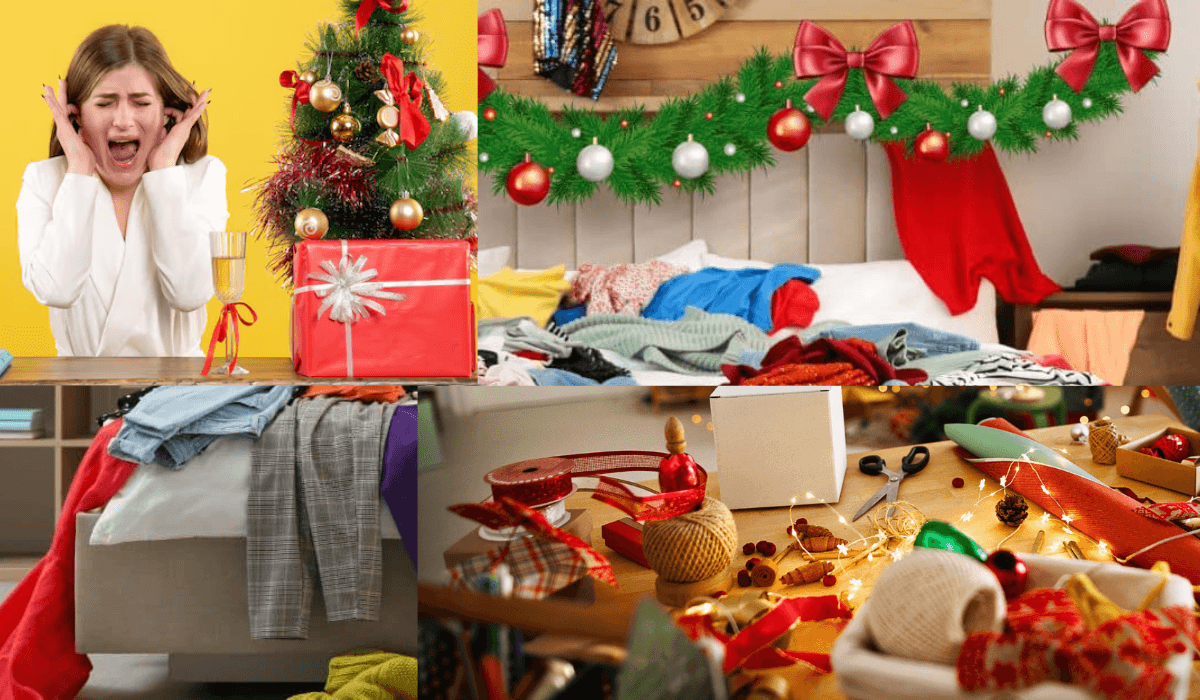
Every Christmas Eve around 3 PM, the collective delusion shatters. For weeks we've told ourselves we're prepared, organized, on top of things. We've made lists and checked them twice. We've planned menus and coordinated schedules.
We've assured everyone that this year will be different, that we've learned from past mistakes, that we're finally adults who have Christmas figured out. Then December 24 arrives and reveals what we've always known but refused to admit: we're making it up as we go, held together by masking tape and denial, sprinting toward an impossible deadline we set ourselves.
The 72-Hour Lie We Tell Ourselves
The chaos of Christmas Eve isn't an accident or failure. It's the inevitable result of a holiday that demands perfection while providing insufficient time, money, or mental capacity to achieve it. We spend December lying to ourselves about what's possible, accumulating obligations and expectations like debt we'll pay later. Christmas Eve is when that debt comes due all at once, when we discover exactly how much we've overpromised and under-prepared.
Walk into any grocery store on December 24 and witness humanity at its most desperate. People stare blankly at picked-over shelves, trying to remember what they needed before settling for whatever's left. Arguments erupt over parking spaces and the last bag of cranberries. Someone's crying in the baking aisle because they forgot yeast and now the bread won't rise. This isn't holiday cheer. This is collective panic dressed in winter coats.
The stores themselves participate in the farce. They've been playing Christmas music since October, pushing decorations and gift ideas for eight solid weeks. But on Christmas Eve, even they seem surprised that people actually need things. The shelves look like a Viking raid happened. The staff members have the thousand-yard stare of combat veterans. Everyone knows this happens every single year, yet nobody prepares adequately because adequate preparation would require admitting how fundamentally chaotic the whole enterprise is.
I used to think my family was uniquely dysfunctional in our Christmas Eve scrambling. We'd realize at 4 PM that nobody bought butter, someone would sprint to the store while someone else panic-wrapped gifts with whatever paper scraps remained. My mother would be simultaneously cooking, directing, and having a minor breakdown about the state of the house. We'd tell ourselves next year would be different while knowing it absolutely wouldn't be.
Then I started comparing notes with friends and realized everyone's doing this. The families who seem effortlessly organized on Instagram are frantically assembling furniture at midnight because they forgot toys come unassembled. The people who posted perfectly styled holiday cookies in early December are buying store-made desserts on the 24th. The difference isn't organization or competence. It's willingness to admit the truth publicly.
Why This Matters More Than Getting It Right
Here's what nobody talks about: the Christmas Eve panic is actually the point. All the Instagram-perfect preparation, the early shopping, the careful planning, that's performance. The real holiday happens in the chaos, when we stop trying to meet impossible standards and just survive together. That's when actual connection occurs, in the shared emergency of making Christmas happen despite everything working against us.
I've come to believe that Christmas Eve dysfunction serves a crucial purpose. It forces us to ask for help. It requires lowering our standards. It demands cooperation and grace toward ourselves and others. The person who has everything under control never needs community. The person frantically trying to assemble Christmas dinner with whatever ingredients remain in the store absolutely does.
My best Christmas Eve memory involves my family running out of milk at 8 PM. The stores were closed. My father knocked on three neighbors' doors asking to borrow milk like some kind of lactose-deficient caroler. Each neighbor not only gave us milk but shared their own Christmas Eve disasters: forgotten ingredients, wrapped wrong gifts, broken ovens. What started as embarrassing emergency turned into impromptu neighborhood bonding over shared incompetence.
That never would have happened if we'd been organized. Perfect preparation would have meant staying isolated in our own homes, maintaining the illusion that we had everything under control. The milk crisis forced vulnerability, which forced connection, which created actual community rather than performed holiday cheer. The disaster was the gift.

The Mental Load That Nobody Discusses
Christmas Eve reveals another truth we'd rather ignore: the holiday's mental load falls disproportionately on women, and that load has become completely unsustainable. While everyone theoretically participates in Christmas, someone usually serves as mission control, the person tracking all the moving pieces and ensuring nothing gets forgotten. That person is almost always female, and Christmas Eve is when her labor becomes impossible to ignore.
She's the one who remembers that Aunt Susan is gluten-free, that the kids need new batteries for their toys, that someone needs to defrost the turkey tonight or tomorrow will be disaster. She's managing grocery lists, gift lists, activity schedules, and family dynamics simultaneously while also probably working a full-time job right up until Christmas Eve. The reason Christmas Eve feels chaotic isn't because anyone's incompetent. It's because we've loaded one or two people with a project that should require a team.
I watch my mother on Christmas Eve and see someone who's been running a marathon for six weeks straight, and Christmas Eve is the final sprint where her body starts shutting down from exhaustion. She's simultaneously organizing the kitchen, directing gift-wrapping operations, fielding phone calls from relatives, and trying to maintain cheerful demeanor because expressing exhaustion or frustration would be "ruining Christmas."
This dynamic needs naming because it's actively harmful. We've constructed Christmas to require an impossible amount of coordination and labor, then shamed the people doing that labor for showing any sign of stress. When women break down on Christmas Eve, we treat it as personal failing rather than systemic problem. When they ask for help, we act like they're being demanding rather than reaching the limits of human capacity.
The solution isn't better time management or starting earlier, though both help marginally. The solution is fundamentally rethinking what Christmas requires and who's responsible for making it happen. Every adult in the family should be managing their own portion of Christmas without requiring coordination from central command. Kids old enough to want presents should be old enough to help create the conditions that make presents possible.
The Gift of Lowered Standards
My Christmas Eve revelation came three years ago when I just gave up. Not on Christmas entirely, but on my idea of what Christmas should look like. I stopped trying to make magazine-worthy meals with ingredients that required three specialty stores. I bought pre-made desserts. I wrapped gifts in newspaper when I ran out of wrapping paper. I admitted to my family that I was overwhelmed and needed help, and if they wanted specific things, they'd need to participate in creating them.
Something miraculous happened: Christmas got better. Without the pressure of perfection, we could actually enjoy the preparation. My siblings started contributing their cooking specialties rather than watching me struggle. We laughed about the newspaper-wrapped gifts instead of stressing about presentation. The meal was simpler but everyone was calmer. Lowering my standards raised the actual quality of our celebration.
This goes against everything Christmas marketing teaches us. We're told that Christmas requires perfection, that anything less means failing our families and the holiday itself. But perfection creates distance. It turns Christmas into a performance where the audience judges your execution. Imperfection creates intimacy. It lets people in. It says "this is hard and I'm struggling" which gives others permission to admit the same.
I genuinely believe the best Christmases involve something going wrong. Not catastrophically wrong, but wrong enough that everyone has to adjust, contribute, and abandon their expectations. The year the oven broke and we ate Chinese food. The year someone wrapped the wrong gifts and we did an accidental Secret Santa.
The year it snowed so hard we couldn't drive anywhere and had Christmas in sweatpants. These imperfect Christmases are the ones we remember fondly because they were actually fun rather than anxiety-inducing performances.
Why We Keep Doing This to Ourselves
If Christmas Eve is reliably chaotic and stressful, why don't we change how we approach the holiday? Partly because changing traditions feels like betraying them. We inherited specific ideas about what Christmas should involve, and deviating from those templates feels like failure even when the templates don't serve us.
But mostly we don't change because the chaos serves a purpose we won't acknowledge. The scrambling, the last-minute running around, the frantic assembling of Christmas, all of it creates a sense that we've earned the celebration. We feel that if Christmas came together too easily, it wouldn't count. The struggle is proof of love, evidence that we care enough to stress ourselves into illness making sure everything's perfect.
This is obviously dysfunctional. Love doesn't require suffering. Care can exist without chaos. But we've internalized the idea that ease means not trying hard enough, that convenience means cutting corners, that anything less than maximum effort is phoning it in. So we create artificial difficulty to prove devotion, then wonder why Christmas feels more exhausting than joyful.
I do it too. Even knowing better, even having consciously lowered my standards, I still find myself on Christmas Eve doing things that didn't need doing. Rearranging furniture nobody asked me to move. Making complicated side dishes when simple ones would suffice. Creating work to justify the holiday rather than enjoying the holiday for its own sake. The compulsion runs deep.
What Christmas Eve Actually Teaches Us
If we're honest about Christmas Eve chaos rather than ashamed of it, what does it teach us? First, that our standards are unrealistic and probably need adjusting. If literally everyone struggles to meet Christmas expectations, those expectations are the problem, not the people.
Second, that asking for help is strength, not weakness. The myth of the perfect host who effortlessly creates magazine-worthy holidays harms everyone. Real strength is saying "I can't do this alone" and building community through shared labor rather than impressing people with solo accomplishment.
Third, that imperfection often creates better memories than perfection. The disasters are the stories we tell years later. The perfectly executed Christmas dinner gets forgotten because nothing remarkable happened. The year we had to improvise everything because nothing went according to plan becomes legendary family lore.
Most importantly, Christmas Eve teaches us that connection matters more than execution. Whether the meal is elaborate or simple, whether the gifts are perfectly wrapped or thrown in bags, whether everything goes smoothly or we're improvising constantly, what actually matters is being together. The chaos just forces us to acknowledge that truth by making perfection impossible.
My Personal Peace With the Panic
I no longer fight Christmas Eve chaos. I expect it, plan for it, even welcome it in some ways. I know that despite all preparation, something will go wrong. Someone will forget something crucial. Plans will need changing. Stress levels will spike around 3 PM when the gap between intentions and reality becomes undeniable.
But I've stopped treating that as failure. It's just Christmas Eve being Christmas Eve, the day when we stop pretending we're more organized than we are and start working together to make something happen despite our collective limitations. The panic is part of the process, not a bug in the system but a feature that forces us to cooperate and lower our guards.
I've also started being honest about it. When people ask if I'm ready for Christmas, I say no. When they ask if I have everything under control, I laugh. When they ask what they can bring, I actually tell them instead of insisting I've got it handled. This honesty tends to shock people initially, then relieve them as they realize they can stop performing too.
The Christmas I'm working toward isn't Instagram-perfect or stress-free. It's honest. It's one where everyone admits they're scrambling, where we share the labor and the panic rather than concentrating it in one person, where we laugh about the disasters instead of hiding them. Where Christmas Eve is recognized as the beautiful chaos it is rather than treated as failure to meet impossible standards.
And when I inevitably find myself at the grocery store on Christmas Eve in a mild panic because I forgot something crucial, I'll know I'm exactly where I'm supposed to be. Surrounded by other people who also forgot things crucial, all of us making it up as we go, held together by determination and the irrational belief that somehow, against all evidence, we'll pull this off. We probably will, too. We always do. And that shared accomplishment, achieved through chaos rather than perfection, is the real Christmas miracle worth celebrating.