
As someone who works in clinical nutrition, I want to add that the research base for chrononutrition is real but the hype around it often outpaces what the studies actually show. The effect sizes in most human trials are meaningful but modest.
Sign up to see more
SignupAlready a member?
LoginBy continuing, you agree to Sociomix's Terms of Service, Privacy Policy
Sign up to see more
SignupAlready a member?
LoginBy continuing, you agree to Sociomix's Terms of Service, Privacy Policy

As someone who works in clinical nutrition, I want to add that the research base for chrononutrition is real but the hype around it often outpaces what the studies actually show. The effect sizes in most human trials are meaningful but modest.
Can we talk about Kendrick Sampson as Quincy Jones? That casting choice barely got discussed in the lead up to the film.
The technology sector is experiencing a paradox. While headlines scream about mass layoffs at major tech companies, a critical shortage is quietly building in one of the most essential areas of digital infrastructure. Datacenters, the physical backbone of our digital world, are facing an unprecedented demand surge, and there simply are not enough skilled professionals to build and maintain them. Countries across the globe are rushing to establish their own datacenter infrastructure. From India's ambitious plans to become a datacenter hub to the European Union's push for data sovereignty, and emerging markets in Southeast Asia and Latin America building their first large scale facilities, the construction boom is just beginning.
Jobs that require you to physically be present will always have a floor that remote and automated alternatives cannot undercut. That is the deepest version of the job security argument and it applies perfectly here.
Start with whichever premise sounds most different from what you normally watch. Greatest Estate Developer if you want something funny, Terror Man if you want moral complexity, Season of Blossom if you want to cry.
The three-way interaction between martial arts, technology, and magic described in this article is what sets it apart. Most series that try genre fusion only blend two elements. Adding a third creates a much more complex flavor.
The manhwa world exploded when Solo Leveling first introduced us to Sung Jinwoo's journey from the weakest hunter to humanity's strongest defender. Now, Solo Leveling Ragnarok brings a fresh perspective to this beloved universe, and fans everywhere are asking the same questions. Can the sequel live up to the original? Do you need to read Solo Leveling first? What makes this continuation worth your time? This guide covers everything you need to know about Solo Leveling Ragnarok, whether you're a longtime fan or someone curious about jumping into the series Solo Leveling Ragnarok is not a reboot or alternate timeline. This is a direct sequel that continues the story years after the original series concluded. The protagonist shifts from Sung Jinwoo to his son, Sung Suho, who must forge his own path in a world still recovering from the catastrophic events his father prevented.
Whether or not the release date in this article is accurate, the excitement is justified. ORV has over 300 million views across platforms. It has earned its moment.
In a medium filled with talented artists producing stunning work, making a claim about any series having the "best" art feels bold. Yet Nano Machine consistently delivers combat sequences so fluid, detailed, and visually innovative that even readers who don't typically care about martial arts stories find themselves captivated by the sheer spectacle on display. The series combines traditional murim aesthetics with futuristic sci-fi elements, creating a unique visual identity that stands apart from typical cultivation manhwa. The nano machine implanted in protagonist Cheon Yeo-Woon's body doesn't just give him power. It becomes a storytelling device that allows the artist to visualize techniques, energy flows, and combat analysis in ways other series can't replicate.
The Hero Returns premise is basically what would happen if the world kept calling a tired veteran back into service. That emotional core is more interesting than most hero origin stories.
The pricing model where unused credits expire monthly is a fairly aggressive way to extract value from people who are actively experimenting. That friction is real.
If your meeting culture is so broken that you need an AI to justify skipping meetings, the AI is not the fix. The meeting culture is the problem.
Sports anime and manga have delivered countless memorable series over the decades, from Slam Dunk's basketball brilliance to Haikyuu's volleyball excellence. These stories typically follow familiar patterns: talented but inexperienced protagonist joins a team, forms bonds with teammates, faces rivals, grows through competition, and ultimately pursues championship glory. The formula works because it taps into universal themes about effort, teamwork, and self-improvement. The Boxer, created by JH, takes everything you expect from sports stories and systematically deconstructs it. The protagonist doesn't love boxing. He doesn't form deep bonds with teammates. He doesn't overcome challenges through friendship and determination. Instead, the manhwa presents one of the darkest, most psychologically complex examinations of combat sports ever created, wrapped in stunningly minimalist artwork that elevates the narrative to something approaching high art.
Hot take: the real innovation here is not the technology, it is the interaction design. Dozens of tools had decent transcription before Descript. Nobody made editing the actual interface until Descript did.
Forty million dollars in annual recurring revenue. Six months. One browser-based platform. Those numbers would be impressive for any software company, but for Bolt.new, they represent something more significant: the moment when development environments moved permanently into the cloud and never looked back. Traditional software development has always required setup. Install Node.js, configure your environment, manage dependencies, set up local servers, troubleshoot version conflicts. Before writing a single line of code, developers spend hours or even days preparing their machines. Junior developers often spend their first week just getting their environment working. Bolt.new eliminated all of that with WebContainers technology.
Hot take: the designer-developer relationship was never really about aesthetics. It was about power and ownership over the product. Better tooling helps but it does not address the underlying org structure question.
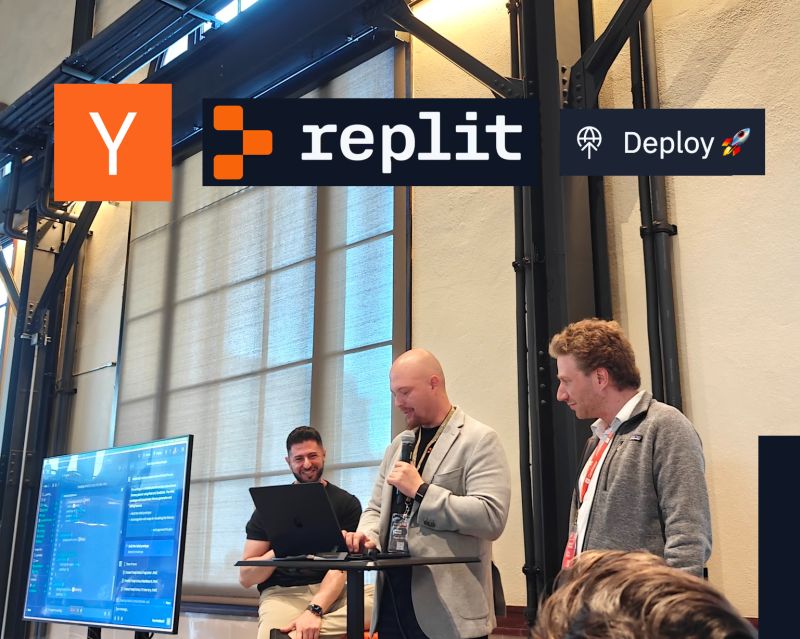
When a company's revenue jumps from $10 million to $100 million in nine months, you pay attention. When that growth comes from an AI agent that builds entire applications autonomously, you realize something fundamental just changed in software development. Replit Agent represents that change, and the numbers prove developers are ready for it. Replit started as a browser-based coding environment for education. Students could write Python or JavaScript without installing anything locally. Teachers loved it because setup time vanished. But the company saw something bigger. If you could run code in the browser, why not let AI write that code? That question led to Agent 3, an AI that doesn't just suggest code completions. It builds entire applications from scratch.
I will play devil's advocate and say the article overclaims when calling this the most emotionally complex tower climbing manhwa. Omniscient Reader has a legitimate argument for that title and comparing the two is not straightforward.
As someone who works in venture-backed startups, the product validation workflow described here is exactly what we do now. Founders are expected to show traction before raising, and Bolt compresses the time to traction dramatically.
every major AI lab is going to end up doing this. Meta is doing it, OpenAI is doing it, and now Anthropic is exploring it. The era of everyone just buying Nvidia GPUs and calling it a day is clearly ending.
Join independent creators, thought leaders, and storytellers to share your unique perspectives, and spark meaningful conversations.