Does anyone else think Antoine Fuqua was the wrong director for this? His style tends toward big visceral impact and Michael Jackson's story needed someone with more psychological interiority.
21
Sign up to see more
SignupAlready a member?
LoginBy continuing, you agree to Sociomix's Terms of Service, Privacy Policy

Does anyone else think Antoine Fuqua was the wrong director for this? His style tends toward big visceral impact and Michael Jackson's story needed someone with more psychological interiority.
Cooling engineers getting 67 percent demand growth since 2022. Let that number sink in.
What chapter does it actually start getting good? Asking genuinely because a few people told me to push through the early episodes.
The year 2026 marks a pivotal moment in the evolution of manhwa as a medium. What started as a trickle of Korean comics receiving anime adaptations has become a flood, with at least fifteen confirmed projects bringing beloved manhwa to animated life. This explosive growth wasn't accidental but the inevitable result of Solo Leveling's massive success proving that manhwa adaptations can compete with traditional manga anime in quality, popularity, and profitability. Studios across Japan and Korea are investing heavily in manhwa properties, recognizing that Korean storytelling brings fresh perspectives, innovative premises, and built-in fanbases eager to see their favorite series animated. The diversity of genres receiving adaptations demonstrates that manhwa appeal extends far beyond action and fantasy into romance, psychological thriller, sports, and slice-of-life territories.

The revenge arc setup is so clean. You understand exactly what Jooheon lost, exactly who is responsible, and exactly why he is willing to do morally questionable things to win. That clarity of motivation carries a lot of narrative weight.
Every manhwa on this list is worth reading but they all share one flaw. Once you've read enough of them the stat screen reveals and level up moments stop feeling surprising because the formula is so predictable.
Counterpoint to the people saying skip straight to Ragnarok, the original Solo Leveling is legitimately one of the most satisfying reads in modern manhwa. Don't rob yourself of that experience just to get to the sequel faster.
Solo Leveling being the first manhwa anime to win Anime of the Year at the Crunchyroll Awards was a watershed moment. Not just for manhwa but for how the global anime community thinks about Korean storytelling.
The article mentions you own the code through GitHub sync. What it does not mention is that most non-technical founders have no idea what to do with that code if something goes wrong. Ownership without comprehension has real limits.
This is the best argument for AI editing tools that nobody talks about. The confidence that errors are recoverable changes how you show up in front of the camera or microphone in the first place.
Anyone using Runway for architectural visualization? Wondering how it handles interior rendering with consistent material properties across different lighting scenarios.
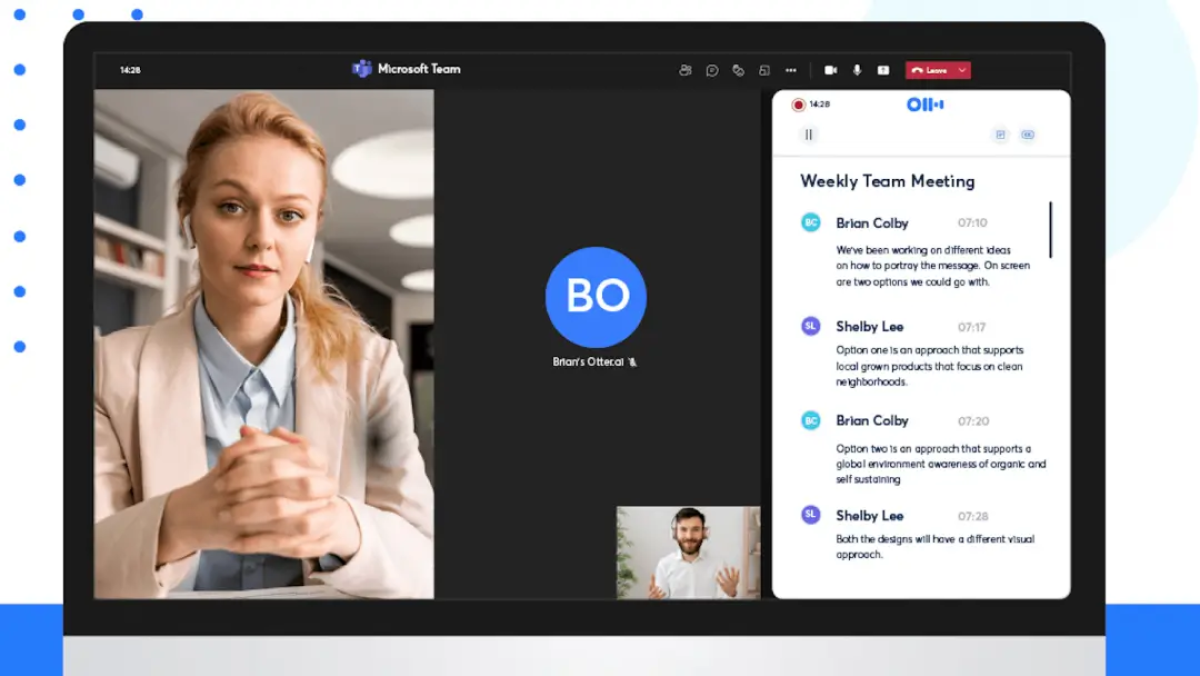
Knowledge workers spend an average of 18 hours per week in meetings. Much of that time involves routine status updates, recurring check-ins, and informational sessions where your physical presence adds minimal value. Otter.ai introduced a provocative concept called OtterPilot: an AI assistant that joins meetings autonomously when you can't attend, records everything, generates summaries, and answers questions about what happened. Connect Otter.ai to your calendar. The system monitors your scheduled meetings and automatically joins Zoom, Google Meet, or Microsoft Teams calls when they start. OtterPilot records audio, generates real-time transcripts, identifies speakers, and creates AI summaries with action items. You receive a meeting briefing without attending the meeting yourself.
Speaking from experience doing UX work, the emotional cost of watching your designs get interpreted badly is not trivial. You put weeks into getting the details right and then the implementation feels like a rough draft. A tool that closes that gap has real psychological value.
In a manhwa landscape dominated by dungeon crawling, regression narratives, and power fantasies, The Greatest Estate Developer stands out by asking a simple question: what if the protagonist's greatest weapon wasn't a sword or magic system, but civil engineering knowledge? This bizarre premise transforms into one of the most entertaining, genuinely funny, and surprisingly heartfelt series currently running, proving that innovation in storytelling comes from unexpected places. The series takes the familiar isekai setup where a modern person finds themselves in a fantasy world and completely subverts expectations. Instead of becoming an adventurer or hero, protagonist Kim Suho uses his engineering knowledge to revolutionize construction, infrastructure, and economic development. What sounds like it should be boring becomes absolutely captivating through sharp writing, excellent comedic timing, and genuine passion for showing how infrastructure improves lives.

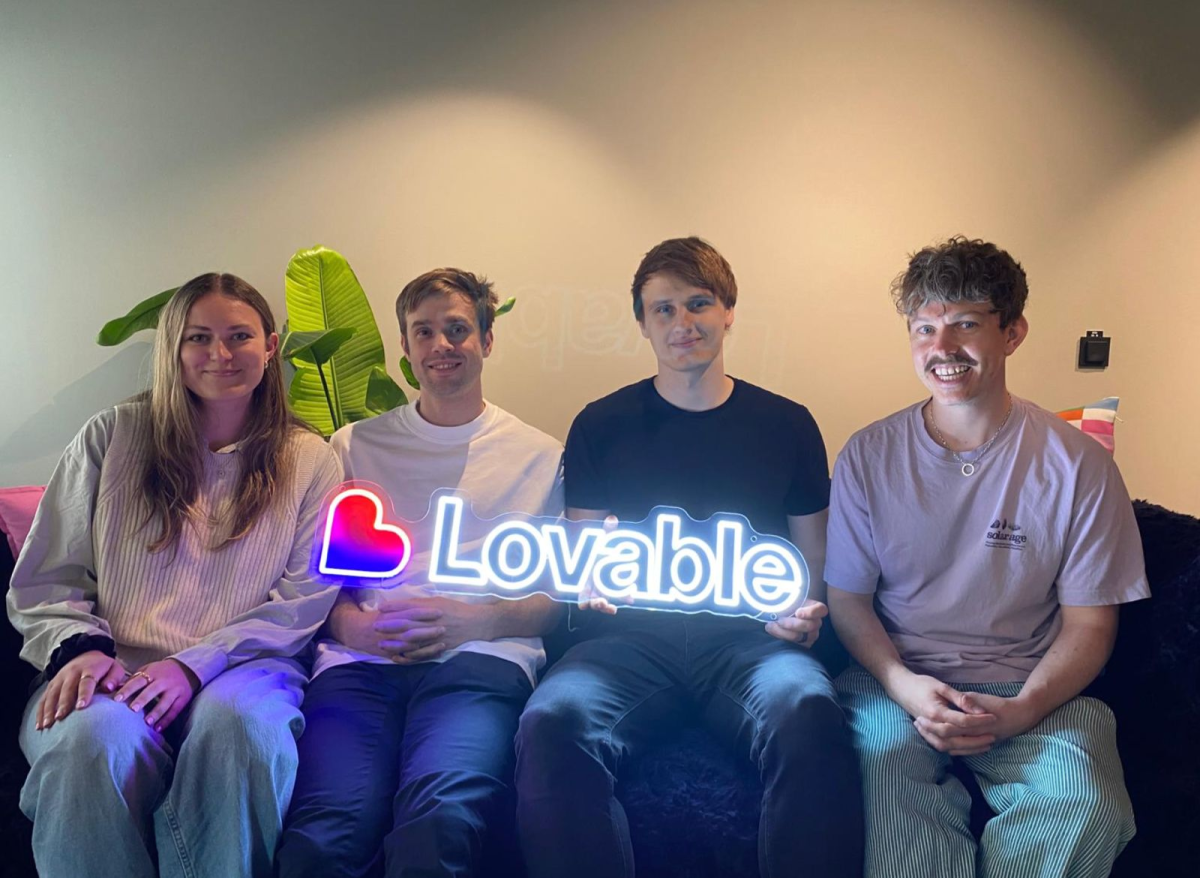
The software development world just witnessed something unprecedented. A European startup called Lovable reached $20 million in annual recurring revenue in just two months, making it potentially the fastest-growing startup in European history. But here's the twist that's making traditional software agencies nervous: they did it by giving non-technical founders the power to build full-stack applications without writing a single line of code. For years, the promise of no-code tools has been the same: anyone can build an app. But the reality has always been different. You'd create a beautiful frontend, get excited about your progress, and then hit the technical cliff. Suddenly you needed to configure databases, set up authentication, manage API keys, and deploy to servers. The "no-code" dream became a "hire-a-developer-anyway" nightmare.
As someone who does penetration testing professionally, the phrase that what took months will now take minutes is not hyperbole. We have been watching smaller versions of this capability creep up for two years. Mythos is a step change.
As someone who does AppSec work, we have known for years that static analysis and fuzzing miss entire categories of logical vulnerabilities. This is why human review still matters, and it is also why something that reasons about code rather than just scanning it is a different beast.
The IMF director saying the world cannot protect the international monetary system against massive cyber risks is not the kind of statement you expect in a tech product announcement news cycle. Wild week.
In a rare divergence from industry norms, TikTok has confirmed it will not adopt end-to-end encryption (E2EE) for direct messages, breaking with nearly every major social media platform and reigniting one of the tech industry's most contentious debates. The Chinese-owned video platform told the BBC exclusively that it believes the privacy technology championed by Meta, Apple, and others as essential for user protection actually makes users less safe by creating "dark spaces" where harmful content can flourish beyond the reach of safety teams and law enforcement. The decision puts TikTok in direct opposition to its competitors while potentially exposing the company to fresh criticism over data protection, particularly given ongoing concerns about its ties to Beijing.
Speaking from experience working adjacent to luxury PR, the fact that Piccioli himself described her attendance as a casual request rather than a formal invite actually makes her look better, not worse. It means the relationship is real.