
What about people who exercise in the evening? Does late workouts conflict with the idea of tapering food down by late afternoon?
9
Sign up to see more
SignupAlready a member?
LoginBy continuing, you agree to Sociomix's Terms of Service, Privacy Policy

What about people who exercise in the evening? Does late workouts conflict with the idea of tapering food down by late afternoon?
Agreed on the content warning point. Worth adding that the horror here is mostly cerebral and atmospheric rather than gore-focused. But the conceptual darkness is dense and does not let up.
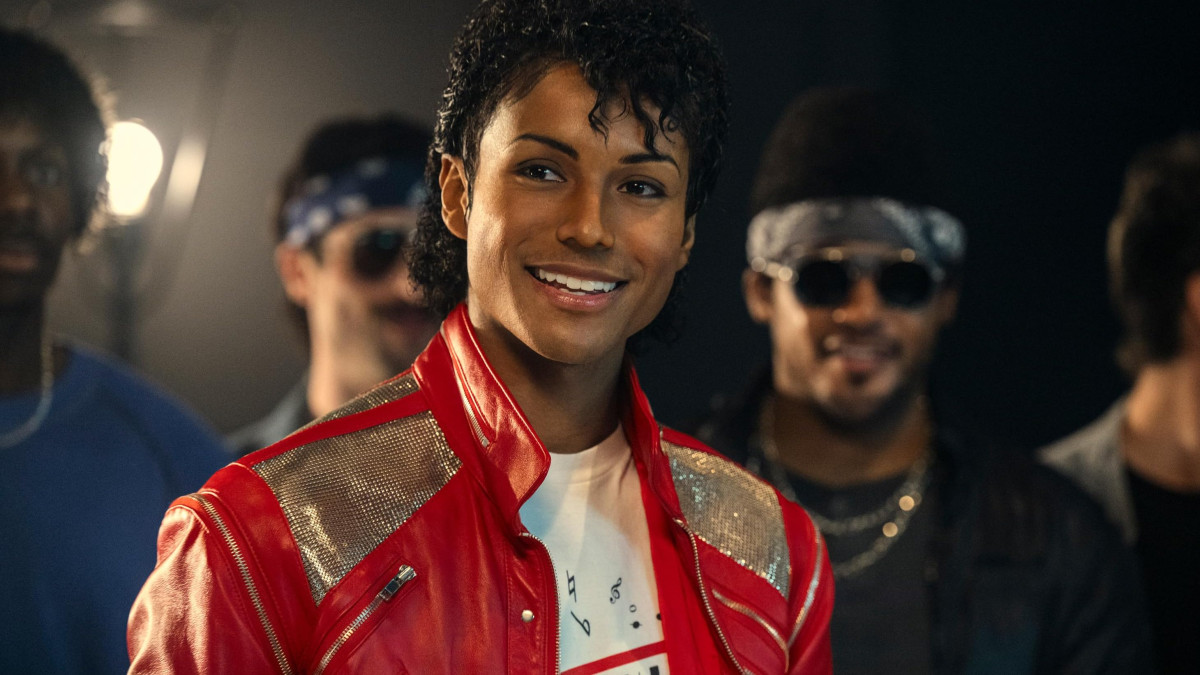
The Michael movie review verdict is in, and it is more complicated than the 26% Rotten Tomatoes score suggests. Antoine Fuqua's long-delayed Michael Jackson biopic, simply titled Michael, hit theaters this weekend with Jaafar Jackson playing his late uncle, and the critical response has been brutal. The BBC gave it one star. Roger Ebert's site called it a filmed playlist in search of a story. Yet early audience reactions on social media have been warmer, ticket pre-sales suggest an $80 million opening, and Variety thought it worked as an engrossing middle-of-the-road biopic. After tracking coverage across more than a dozen outlets over the past 48 hours, I think the honest answer to "should you watch this?" depends almost entirely on what you want from a music biopic, and this guide breaks down exactly what the film delivers, what it skips, and who will actually enjoy sitting through its two-hour-and-nine-minute runtime.
The bones pun potential in the community for this series is completely untapped. That is a missed opportunity.
The God of High School comparison is brutal but fair. Great action, hollowed out story, forgotten within a season. The Boxer cannot survive that same treatment because the story is the entire product.
The article's framing of streaming platforms as accelerators for manhwa anime is correct but undersells how much the Korean government's cultural export strategy has contributed. KOCCA funding and support is behind several of these projects.
The Tapas season two English release starting November 2025 was great but then catching up to where translations currently are felt too fast, now it's just waiting again.
When Tomb Raider King first exploded onto the manhwa scene, it brought a fresh take on dungeon crawling stories by combining archaeological adventure with ruthless protagonist energy and a treasure-hunting premise that felt genuinely different from typical gate and dungeon narratives. The series built a dedicated fanbase through its satisfying blend of historical artifact powers, strategic relic acquisition, and a protagonist who wasn't afraid to be morally gray in pursuit of his goals. Now, with the anime adaptation confirmed for 2026 as one of the most anticipated manhwa-to-anime projects, Tomb Raider King is experiencing a resurgence. New readers are discovering the series while longtime fans eagerly await seeing Jooheon Suh's relic-hunting adventures brought to life with animation. The timing couldn't be better, as the series has built enough content to support a substantial adaptation while maintaining momentum in its ongoing storyline.

Kim Dokja spending over a decade as the only remaining reader of an abandoned web novel before it becomes real is the kind of premise that sounds absurd until you sit with it and realize how quietly devastating it is.
In a manhwa landscape dominated by dungeon crawling, regression narratives, and power fantasies, The Greatest Estate Developer stands out by asking a simple question: what if the protagonist's greatest weapon wasn't a sword or magic system, but civil engineering knowledge? This bizarre premise transforms into one of the most entertaining, genuinely funny, and surprisingly heartfelt series currently running, proving that innovation in storytelling comes from unexpected places. The series takes the familiar isekai setup where a modern person finds themselves in a fantasy world and completely subverts expectations. Instead of becoming an adventurer or hero, protagonist Kim Suho uses his engineering knowledge to revolutionize construction, infrastructure, and economic development. What sounds like it should be boring becomes absolutely captivating through sharp writing, excellent comedic timing, and genuine passion for showing how infrastructure improves lives.

Pushing back slightly on the most emotionally complex framing in the title. Complex is not always better and some readers want different things from their reading experience. The emotional intensity here is intentional but it is not for everyone and that is okay.
The regression subgenre has exploded in popularity over the past few years, becoming one of the most beloved narrative frameworks in Korean manhwa. The core premise is deceptively simple: a protagonist dies or fails catastrophically, then returns to an earlier point in time with their memories intact. Armed with future knowledge, they get a second chance to change their fate, save loved ones, gain power, or pursue revenge against those who wronged them. What makes regression stories so compelling is the combination of dramatic irony, strategic satisfaction, and emotional depth they provide. Readers know what the protagonist knows, creating tension when other characters make mistakes we can see coming. We feel smart alongside protagonists who use foreknowledge to outmaneuver enemies. And we experience the emotional weight of carrying memories of futures that haven't happened yet, of people who died who are currently alive, of betrayals that haven't occurred.

The article talks about Korean storytelling bringing fresh perspectives but does not engage with the fact that a lot of these premises, regression, system integration, hidden power, are just as formulaic as the manga genres they are supposedly refreshing.
The broader trend this fits into is the move toward what some are calling vibe editing, where you describe your creative intent and AI handles the technical execution. Descript with Underlord is the most complete example of that right now.
The article says the question is not whether companies will adopt this technology but how quickly. That framing assumes the technology keeps improving and the ethics concerns do not catch up. I would not assume either of those things.
Tried HeyGen for a product demo series for a SaaS I help run. Honest review: the lip sync on Avatar III is still a bit off on certain consonant sounds, but Avatar IV is noticeably sharper. For anything over two minutes the quality difference becomes obvious.
My real estate team uses stock avatars for neighborhood walkthrough scripts. We generate a new video every time a listing detail changes without going back to reshoot anything. Saves probably six hours a week across the team.
The temporal consistency improvement is what finally made me switch from just using stock footage for background plates. An AI generated exterior shot that holds together across 8 seconds saves me an entire location day.
While Synthesia leads in revenue, HeyGen leads in customer acquisition momentum with 152% year-over-year growth in mid-market adoption. That explosive growth rate allowed HeyGen to close much of the customer count gap by late 2025. The company is winning by making avatar video accessible to smaller teams and individual creators who cannot afford enterprise contracts but need professional video capabilities. HeyGen positioned itself for small and medium businesses, marketing teams, content creators, and solo entrepreneurs rather than enterprise learning and development departments. This market segment values affordability, ease of use, and creative flexibility over governance features and advanced integrations. Average contract values are roughly one-third of Synthesia's, reflecting this different customer profile.

The action item extraction is impressive when it works. The AI correctly identified who committed to what in three separate discussions during a product planning session and got it right each time. That surprised me.