Moving away to university is an undeniably huge upheaval, both physically and mentally. Many people struggle in their first year, more specifically their first semester. Even more so this year due to starting during a global pandemic, it was socially isolating at times, especially when we went into the second national lockdown.
Moving to university involves learning at a higher level, meeting new people, and living in a different city, it isn’t easy. Starting university this year was different from any other. Learning online, from a new and alien bedroom, living with people you don’t know, or maybe don’t get along with, and having no opportunity to socialize with people outside your flat really took its toll.
The academic motivation was at its lowest, multiple students struggled with mental health, and we missed family who, for the first time, lived hundreds of miles away. It has been isolating, academically challenging as we still have had to endure the same assignments with hugely compromised learning.
This academic year has been tough, which provided students with the ultimate resilience towards tackling adult life. Now, with hindsight, we have the chance to reflect on this year and perhaps settle on a few things we wish we could have done differently or had the chance to have done.
Instead, had crawled and struggled to the finish line of the year still in a pandemic, with very little enjoyment and compromised social life.
Here are six simple tips to help you survive your first year in college.
1. Do Not Rely on Alcohol to Make Friends
I personally think this is such an important one, hence why it’s number one on this list. There’s nothing wrong with having a few drinks, but so many people take it way too far. People use it as a crutch because it can “make you” more extroverted and louder, so it can be a tool to make friends with.
But it doesn’t give you real friends, it makes you the figure of fun. Getting that drunk makes others laugh at you, not with you, but when you’re drunk realizing that can be hard as your judgment is impaired.
You do not need alcohol to make friends, the most secure friendships aren’t that superficial. You make friends based on your personality, find like-minded people, get to know them, and then have a few drinks, don’t have the drinks and then try to build bridges, it just doesn’t work.
There are few positives in getting out of control drunk multiple times a week, not to mention it’s dangerous. These people don’t know you yet, they aren’t obligated by the unwritten rules of friendship to look after you, so anything could happen, it simply isn’t safe and you only leave yourself at risk.
2. Join Your Subject Societies for the best advice related to studies
Often, the joining fee for subject societies are low, maybe £3 or £4, and sometimes completely free. Maybe not the best option from a social perspective, as you will be socializing with the same people you study with and it can get a bit intense spending that much time with the same people.
However, a subject society is a great place to go for advice on finding discounted book prices and help with assignments; especially if you find tutors unapproachable or slow at responding to emails.
Subject societies are basically group chats for your whole subject cohort, meaning second and third years are there too, an even better source of support than your classmates and peers, as first years, are likely in the same boat as you and may find it harder to advise you. On the other hand, older students have been where you are right now, they’ve been through it, making them great people to approach for advice.
3. Join a “Fun” Society or a student club for socializing and making new friends
In all honesty, subject societies are not the greatest for socializing, and the events often are not as extravagant as sports or hobby-based societies, often because they simply don’t receive as much funding.
Also, you will probably want a change of scenery, spending all day studying Psychology for example, and then spending all night with the same people, in a bar, discussing Psychology amongst other things can be heavy on one subject and might feel like your degree is haunting you.
Joining a sports society can get you discounted gym memberships, which to students on a budget is something to jump at if you are interested in joining the gym! Other societies have great opportunities to meet like-minded people.
For example, if you like cocktails, join the cocktail society if your university has one. Everyone, there will love cocktails just like you do, have fun mixing drinks and trying new things, and making new friends who share your love or interest.
4. Take Care of Your Mental Health
It is so easy to get swept up into the hectic and new lifestyle that comes with the university. However, in doing so, you can end up massively neglecting your mental health. I can’t stress enough how important it is to take some time out every so often. Having a day in bed once in a while to recharge your batteries is sometimes so needed.
In my first year, my friends and I would pencil in a bed day together, for the same day. We found we often needed them at the same time so we would all be in our own flats, just relaxing, watching Netflix and taking a day off, and then the next day we would make sure we all got up and out at a sensible time and met up for a coffee or a walk or something, so we didn’t end up becoming stuck in bed.
We had a dynamic that worked almost perfectly, we took care of each other when we needed to, which actually only strengthened our friendships in the long run.
We saw each other sad, stressed, hungover, you name it we saw it! It was a little weird at first opening up to someone new and understandably so, but now we are super comfortable with each other, there is nothing that can surprise us anymore. We looked after each other because that’s what friends do.
5. Do not bunk lectures
This one might sound obvious- it’s why we are all paying over £9000 a year right? For the learning, the education, the degree? The amount of people who skip classes and lectures as a regular occurrence is staggering, at least from my experience at university, I don’t think I ever attended a seminar with full attendance this year. I am studying for an English degree, meaning contact hours are limited, I had three seminars a week, yet people still skipped them.
Other than the sense of wasting money, given the lectures, seminars and the tutors' time are all the things we are paying for; believe it or not, lectures and seminars are there for a reason.
They help with assignments, making them easier and that bit less stressful, purely because you would have a better grasp on the content you are producing essays on.
When exam season rolls around, having a good understanding of the content only benefits you in the long run, leading to less stressful revision and higher grades. In short, stay on top of your workload and show up to classes.
6. Make Lecture Notes Straight After Class
Similarly to above, it’s important to remember that you are at university to get a degree, it’s what those tuition fees are for. So, it’s vital that you maintain a steady focus on your studies.
It’s a common misconception to think “I don’t need to make notes, I’ll remember it”. It’s wrong. You won’t be able to remember it. It’s too much information at once to be able to retain without making notes. So, after class, I would recommend taking your lecture notes and typing them up more neatly and coherently, adding things you didn’t jot down but are still in your short-term memory.
I can’t stress enough how helpful this will be when you get to essay/exam season, it makes revision so much less stressful, as everything will be organized and easy to access, not to mention containing the information you need to succeed.
Ultimately, do not forget where you are and why you are there. You are there to study and eventually get a graduate job, you won’t be hired if you fail your essays and exams, don’t waste the money you are paying.
7. Keep Hygiene Standards
Again, may be obvious, but it’s surprising how many unhygienic university students are out there. Living in halls is often students' first time living away from home, first time cooking and cleaning for yourself, so it can be easy to just forget that bathrooms and kitchens don’t magically stay clean, or that washing up won’t do itself.
Especially learning online, having a clean and tidy room really helped me feel organized and gave me a productive workspace, meaning I could produce higher quality work. Lots of subjects, English included, have a small number of contact hours compared to independent work time. So having a clean and tidy, as well as a comfortable place to live and study can make a huge positive difference to your grades.
Also, it's just considered to be clean and tidy! Your flatmates, and later housemates once you move into a shared house, don’t want to have to smell your dirty, unwashed gym kit, or have to constantly remind you to do your washing up or clean the shared bathroom, your flatmates are not your carers!
*Side note: do not use a hoover to clean sick. Just don’t. Mop it up. The smell will linger in the vacuum making any carpet or floor you vacuum also smell sick. It’s gross.
8. Join freshers groups and make Some Friends Before Moving
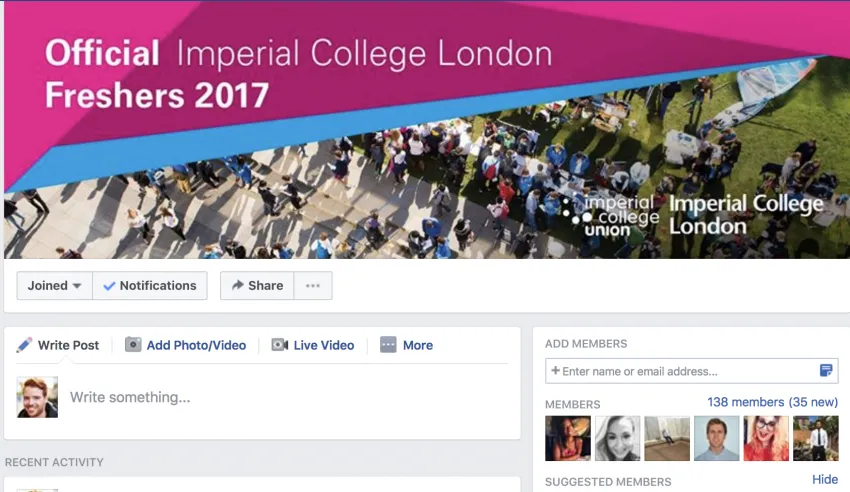
Almost all universities have freshers group chats or Facebook groups. They can be overwhelming as there are a lot of people on there, but do join them despite that. I joined one before I was even accepted into my university, which seemed to really help.
We made a breakout, a smaller group for English students, and we quickly started building friendships. We had a few zoom calls, read some of the set texts together, and just got to know each other.
My advice to you is, use your initiative and some common sense. There is no harm in messaging first, build some friendships, talk about your interests and try to meet up before you move. If you get no reply don’t let it bruise your ego, try again with someone else. Ask the big groups “is anyone else doing [course name]” and you should get at least a couple of responses in the affirmative.
I met up with two girls from my group chat before I moved- it turned out we lived fairly close to each other; we had the best day! It was a little awkward at first, as we didn’t know each other at all, but we soon broke the ice by having me get two spontaneous piercings despite knowing that my family wouldn’t approve.
Now we all laugh about it and those two are two of my closest friends. It was a great way to bond, by doing something unexpected and silly, and it really did work.
Moving to a new city is scary, so having a couple of familiar faces in the first week really helped us to settle in, it made the transition that bit less daunting, because we already knew each other.
9. Make Meal Plans
In the grand scheme of things, it doesn’t really matter whether you shop in M&S or Aldi, without a meal plan you will end up spending more money than you need to on food, even more so if you drink alcohol.
image source: insider
It makes a good dent in your budget, so remember to take that into account too, don’t sacrifice your food allowance for alcohol, food takes the priority and lots of students don’t understand that. So, write a shopping list, stick to it, and make a meal plan, it’s cheaper and leaves more money for snacks and drinks.
Another advantage of planning is it keeps you organized, there is no need to stress over not having enough food in to make a meal if you shop on the same day each week and stick to a meal plan.
10. Keep Emergency Snacks Close at Hand
My final tip, and still on food, and almost contradicting my last point, a stash of snacks is essential. My personal recommendation is to always keep some chocolate on hand, it releases endorphins, the “feel-good” hormone so when you’re having a bad day, feeling stressed or overwhelmed, eat chocolate, it will help, believe me, it will help.
If you are staying up all night to finish that assignment that is due at 9 am the next morning, having good snacks makes it that bit easier, and chocolate can make your stress level drop from a 10 to an 8, maybe not much, but it’s something.
Plus, the high sugar content gives you a boost too, keeps you awake, and gives a boost of energy. Chocolate is something so minor, but on the bad days that seem impossible, can be just enough to get me to pull through to the next day.
Another snack essential, especially if you are a drinker, is carbs. After a heavy night out, it’s great to have some carbs in your room to soak up the alcohol before you sleep, it can help stop you from feeling quite so hungover the next morning. Believe me, I know from experience, do not drink and then sleep on an empty stomach, it does not feel good!
I really relate to the part about not relying on alcohol to make friends. Wish I had known this my first year. Made some questionable choices trying to be the life of the party.